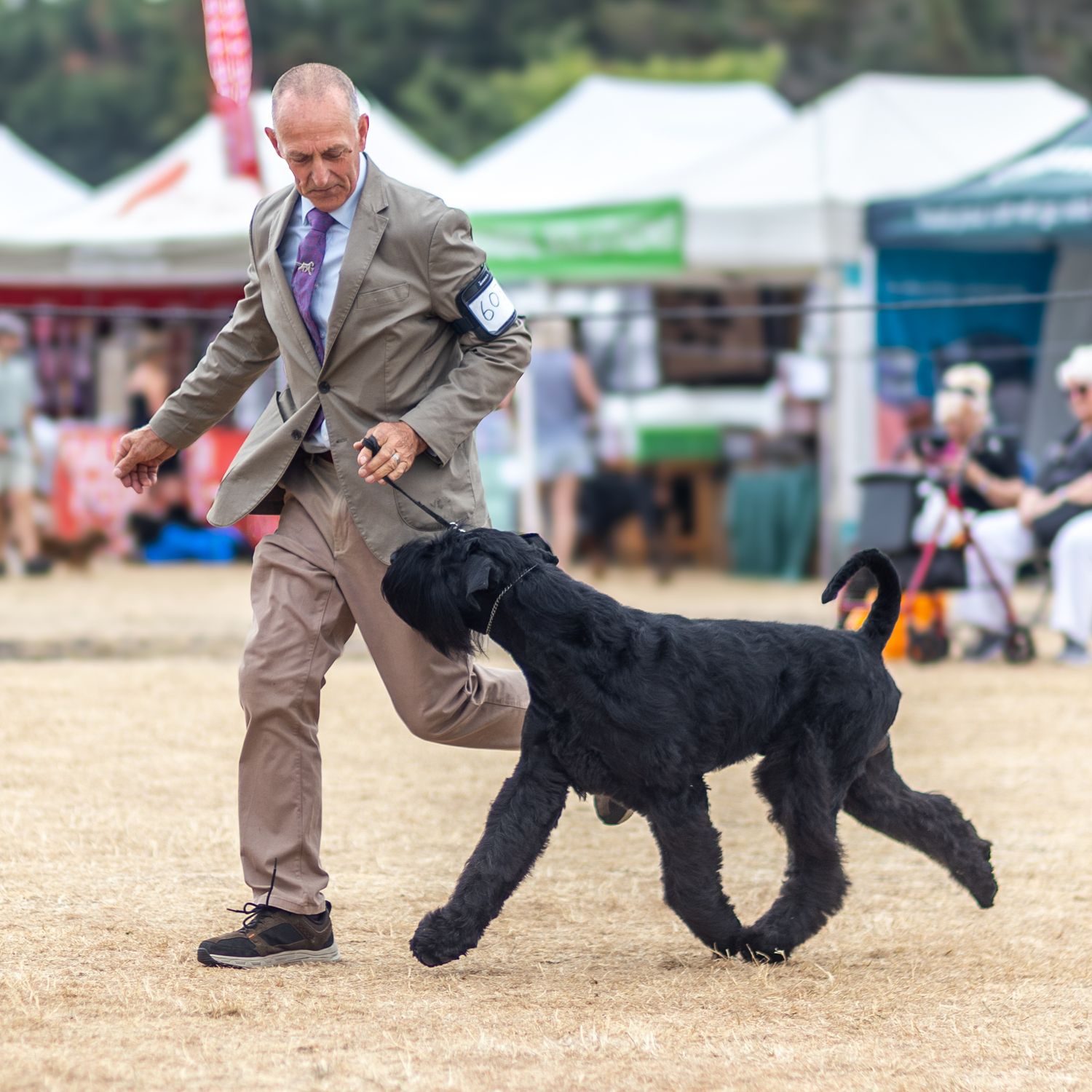
Ch. Philoma The Professional JW begins his journey in bite sports
Proving that showline is just as capable as working line, yet showcasing brilliant a brilliant temperament and mind to be able to excel not only in the show world, but show good promise in the working world
Bodie (Ch. Philoma The Professinal JW)
History of Giants
Origins: Built in Bavaria for Work and Strength
The Giant Schnauzer originated in 17th-century southern Germany, particularly in the regions of Bavaria and Württemberg. Developed by farmers and cattlemen, the breed was created to serve as a rugged, reliable working dog, one that could handle driving livestock, guarding farms, and enduring the tough Alpine climate.
These early dogs needed to be strong, intelligent, and protective, qualities that still define the Giant Schnauzer today.
Ancestry: A Blend of Powerful Working Breeds
To develop this larger version of the Standard Schnauzer, breeders crossed a variety of working dogs, including:
- Standard Schnauzer – brought the breed’s signature wiry coat and sharp intelligence
- Great Dane – added size and power
- Bouvier des Flandres – contributed herding ability and toughness
- German Pinscher – enhanced alertness and determinat
The result was a powerful, highly trainable dog with a keen sense of duty and a natural instinct to protect.
Early Roles: The Alpine Drover and Farm Guardian
Originally, the Giant Schnauzer was known as the "Münchener" named after the city of Munich, where it worked as a:
- Cattle driving dog (drover), moving livestock to market
- Farm guardian, protecting property and livestock
- Watchdog for breweries, butcher shops, and merchants
The breed’s protective nature and imposing presence made it invaluable across rural southern Germany.
Transition to Urban Roles: The Early 20th Century
As cattle driving declined with industrialization, the Giant Schnauzer found a new role in urban environments. By the early 1900s, it was being used in:
- Police and military work
- Security and guard dog duties
- Messenger and patrol tasks during wartime
The breed’s strength, trainability, and natural suspicion of strangers made it a favourite among law enforcement and military personnel in Germany.
Breed Recognition and Expansion
- First dog show appearance: Early 1900s in Munich
- Recognized by the German Kennel Club: 1923
- Recognized by the American Kennel Club (AKC): 1930
Despite its working dog reputation, the Giant Schnauzer remained relatively rare outside of Europe until the mid-20th century.
Post-War Growth and Global Spread
After World War II, the breed gained wider recognition for its versatility and courage, leading to increased interest in the United States and other countries. By the 1960s and 70s, the Giant Schnauzer was seen in:
- Competitive obedience and protection sports (like Schutzhund/IPO)
- Search and rescue operations
- Law enforcement and personal protection work
Modern Roles: A Versatile Working Companion
Today, the Giant Schnauzer is known for its sharp intelligence, athleticism, and loyalty. It excels in a wide variety of roles:
- Police and Military Dog – tracking, protection, detection
- Sporting Dog – obedience, agility, protection sports
- Service and Therapy Dog – in select roles
- Family Guardian – loyal, watchful, and affectionate with proper training
Defining Traits Forged by Purpose
Centuries of working history have shaped the Giant Schnauzer into a breed with:
- Bold, confident temperament
- High intelligence and trainability
- Strong guarding instincts
- Dense, weather-resistant coat
- Large, powerful frame (males: 25.5–27.5", females: slightly smaller)
A Working Legend with a Noble Spirit
From the rugged hills of Bavaria to modern-day homes and working fields, the Giant Schnauzer remains a symbol of strength, intelligence, and loyalty. Whether guarding livestock, working alongside police, or protecting a family home, the breed continues to live up to its legacy as one of the most versatile and capable working dogs in the world.